
Should You Hire Offshore Accounting Support from the Philippines?
The honest answer is: it depends. And any article that opens with a definitive “yes, absolutely” is trying to sell you something before you have had a chance to think it through.
The better question is not whether offshore accounting works in general. It clearly does, for a significant and growing number of businesses. The better question is whether it works for your business, right now, given how your finance function is currently set up and what you actually need it to do.
This article is built around that question. It lays out the circumstances where offshore accounting support makes strong sense, the situations where it does not yet, and the factors that determine which category your business falls into.
What “Offshore Accounting Support” Actually Covers
Before evaluating the decision, it is worth being precise about what is on the table. Offshore accounting support is not one thing. It describes a range of arrangements that vary significantly in scope, seniority, and what they require from the business to work.
At one end, it means a bookkeeper who handles transaction categorization, bank reconciliation, and basic ledger maintenance. This is high-volume, process-driven work that transfers offshore cleanly when the inputs (bank feeds, receipts, vendor information) are organized and accessible.
At the other end, it means a senior accountant or small offshore accounting team managing the full finance function: financial reporting, month-end close, accounts payable and receivable, payroll processing, tax preparation support, and analysis that informs business decisions. This is higher-complexity work that requires more onboarding investment but delivers proportionally more value once the arrangement is running.
Between those two points are dozens of configurations. Understanding where on that spectrum your business sits is the first step in deciding whether offshore accounting support is the right move.
The Case For: When Offshore Accounting Support Makes Clear Sense
There are specific business situations where offshore accounting support is not just viable but genuinely the best available option.
Your current finance function is a bottleneck. If month-end takes three weeks instead of one, if invoices are getting processed late, if your reconciliations are consistently behind, the problem is usually capacity rather than complexity. A skilled offshore accountant or bookkeeper adds the capacity the function needs without the overhead of a full local hire.
You are spending owner or senior staff time on accounting tasks. This is one of the clearest signals that the function is understaffed. When a business owner is personally entering transactions, or when a senior manager is spending half their week on finance administration, the cost of that arrangement is real even if it does not appear on a payroll line. Offshore accounting support restores those hours to where they create the most value.
You need specialist skills that are hard to hire locally. A payroll accountant with multi-state experience, a senior accountant familiar with a specific ERP platform, a bookkeeper certified in Restaurant365, Xero, or QuickBooks Online: these profiles can be difficult and expensive to source in local markets. The Philippine talent pool has depth in all of these areas, and the sourcing timeline through a quality staffing provider is typically faster than a local search.
Your finance volume is growing faster than your team. Transaction volume, headcount, and complexity tend to grow together as a business scales. Hiring offshore accounting support ahead of that growth curve is significantly more cost-effective than catching up to it after the function has already become a problem.
The Case Against: When the Timing Is Not Right
Offshore accounting also fails in predictable ways, and those failure modes are almost always related to conditions on the business side rather than the talent itself.
Your accounting processes are not documented. If your current approach to bookkeeping is largely in someone’s head, handed over verbally, or assembled from a combination of habits that have never been written down, an offshore hire cannot replicate or improve it. They need a process to follow. If that process does not exist in documented form, the first month of an offshore arrangement is spent building documentation that should have existed already, and the output quality during that period reflects it.
Your books are in poor shape before the handover. Handing disorganized or materially inaccurate accounts to an offshore accountant and hoping they will fix the underlying problems is a recipe for frustration on both sides. A cleanup exercise should happen before the offshore arrangement begins, not as the offshore arrangement’s first task.
You do not have accessible cloud-based systems. Offshore accounting works best when both sides can access the same systems simultaneously. Desktop software that requires a VPN configuration to access remotely, or accounting records stored in local spreadsheets, adds friction that slows the arrangement and introduces error risk. If your systems are not cloud-ready, that transition should be part of the setup before the offshore hire starts.
The scope is too vague. “Help with accounting” is not a brief. An offshore accountant needs to know specifically which functions they own, what the output expectations are, how approvals work, and what falls outside their remit. The clearer the scope, the faster the arrangement reaches productive operation.
How to Assess Your Own Readiness

These questions are designed to give you a realistic picture of where your business stands before making the decision.
| Readiness Question | Yes | No / Not Yet |
|---|---|---|
| Is your accounting software cloud-based and accessible remotely? | Ready to proceed | Migration needed first |
| Are your current accounting processes documented, even informally? | Ready to proceed | Documentation work needed |
| Are your accounts reconciled and reasonably current? | Ready to proceed | Cleanup recommended first |
| Can you define what you want an offshore hire to own specifically? | Ready to proceed | Scope definition needed |
| Does your business have consistent, recurring accounting work each month? | Strong fit for offshore | May suit project-based help instead |
| Is the person currently doing your accounting spending time on tasks above their pay grade? | Strong case for offshore | Evaluate current allocation first |
If most of your answers are in the “ready” column, offshore accounting support is a reasonable next step. If several answers fall in the “not yet” column, the work to get ready is worth doing before making the hire, because it will directly determine whether the arrangement succeeds.
What the Transition Looks Like in Practice
Understanding what the first 60 to 90 days of an offshore accounting arrangement involves helps manage expectations and reduces the most common sources of early frustration.
Days 1 to 14: Access and orientation. The offshore accountant or bookkeeper is given access to your accounting platform, payroll system if applicable, and any supporting tools. They review existing records, ask clarifying questions about how transactions are categorized, and work through the first set of tasks with closer oversight than will be needed once they know the environment.
Days 15 to 30: First full cycle. The first complete month-end or full payroll cycle happens under your review. Expect some back-and-forth during this period. It is normal and it is what calibration looks like. The offshore professional is learning your specific environment, not just accounting in general.
Days 31 to 90: Increasing autonomy. Output quality stabilizes. The offshore professional begins anticipating what is needed rather than waiting to be asked. Check-ins shift from daily to a few times per week. The arrangement starts to feel like a function that runs rather than a project being managed.
By the end of the third month, most businesses report that the offshore arrangement is operating at or above the standard they expected, with the most significant variable being how clearly the scope was defined at the start.
Choosing the Right Provider Changes the Outcome

The decision to offshore accounting is only part of the picture. The provider who manages that arrangement determines how closely the outcome matches the expectation.
A quality offshoring provider in the philippines recruits specifically for your role rather than assigning available headcount, gives you direct involvement in selecting who joins your team, stays engaged after placement to support performance and handle HR administration, and backs every placement with a satisfaction guarantee that protects you if the fit turns out to be wrong.
That is a materially different proposition from a freelancer platform that connects you with a candidate, takes a fee, and leaves the rest to you. The structural support around the hire, the ongoing management of the employment relationship, and the accountability of having a partner invested in the arrangement’s success are what distinguish the two models.
The Question Answers Itself When You Look at It Clearly
For businesses with organized processes, accessible systems, and a clear picture of what they need offshore accounting support to do, the decision is not complicated. The talent is available, the cost advantage is significant, and the operational benefit of having a skilled, dedicated accountant absorbing the work that is currently draining time from people who should not be doing it is immediate and measurable.
For businesses that are not yet there, the path to being ready is straightforward: document the processes, clean up the accounts, move to cloud-based software, and define the scope. None of those steps are difficult. All of them pay off whether or not the offshore hire follows.
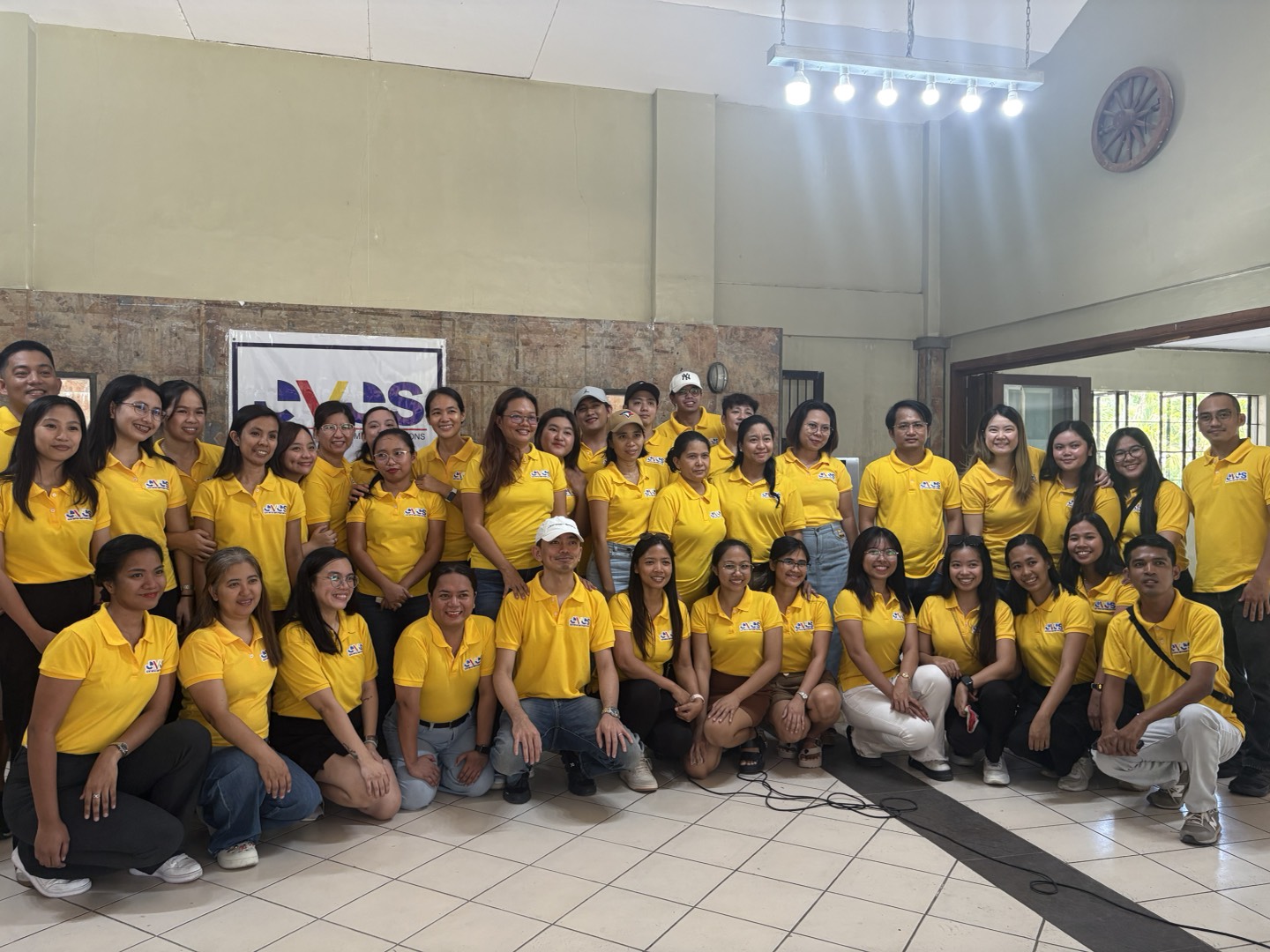
EVES works with businesses at both stages. Whether you are ready to hire now or working toward it, the conversation about offshore accounting support in the Philippines starts with a clear picture of where your business actually stands.
Talk to EVES about your accounting needs and get an honest assessment of whether offshore accounting support is the right move for your business right now.