
How to Build Offshore Teams in the Philippines That Last
There is a meaningful difference between hiring offshore and building an offshore team. Most businesses figure this out somewhere around their second or third hire, when they realize that adding another person to a loose collection of individual offshore roles does not produce a team. It produces a larger loose collection.
A team has shared context. Members understand how their work connects to what colleagues are doing. There is a working culture, even if it developed informally. Communication flows in both directions. People flag problems they notice in adjacent areas of the work, not just in their own lane. That organizational coherence does not emerge from headcount. It is built deliberately, and the businesses that build it intentionally create something with compounding value that individual hiring never achieves.
This article is about that deliberate building: what it requires at the strategic level, how offshore teams develop differently from onshore ones, what the transition from solo hires to a genuine team looks like in practice, and what determines whether the team that results is one the business can actually rely on as it grows.
Why Team Building Is Different From Repeated Hiring

A single offshore hire is a resourcing decision. You have a gap, you fill it, you evaluate the result. The variables are relatively contained: the candidate, the brief, the onboarding, the working relationship.
Building an offshore team involves a different set of variables. How do the roles interlock? Who depends on whose output to do their own work? Where are the handoff points between functions, and what happens when those handoffs break down? How does the team communicate internally, not just with you? What happens to team cohesion when one member is replaced or a new hire is added?
These questions do not have complicated answers, but they need to be asked and answered at the design stage rather than discovered through friction once the team is running. Businesses that think through the team architecture before they start hiring build faster and with significantly less rework than those that assemble roles ad hoc and then try to retrofit a team structure around what they have.
The Three Stages of Offshore Team Development
Offshore teams do not arrive fully formed. They develop through recognizable stages, and understanding those stages helps leaders know what to expect and where to invest attention at each point.
Stage 1: The First Hire. The business places one offshore professional in a clearly defined role. The relationship is direct, the communication is between two parties, and the primary work is calibration: learning each other’s working styles, establishing communication rhythms, and building the mutual trust that allows the offshore professional to operate with increasing autonomy. This stage succeeds or fails based largely on setup quality, brief clarity, and the consistency of the client’s engagement.
Stage 2: Adding the Second and Third Hire. This is where team dynamics begin to emerge and where most businesses underinvest in thought. The second hire needs to be oriented not just to the client but to the existing offshore professional whose work will intersect with theirs. Decisions about who the second hire reports to, how the two offshore roles coordinate, and who handles communication when both people need direction simultaneously are not trivial. Getting this stage right prevents the confusion and duplication that makes multi-person offshore arrangements feel harder than they should.
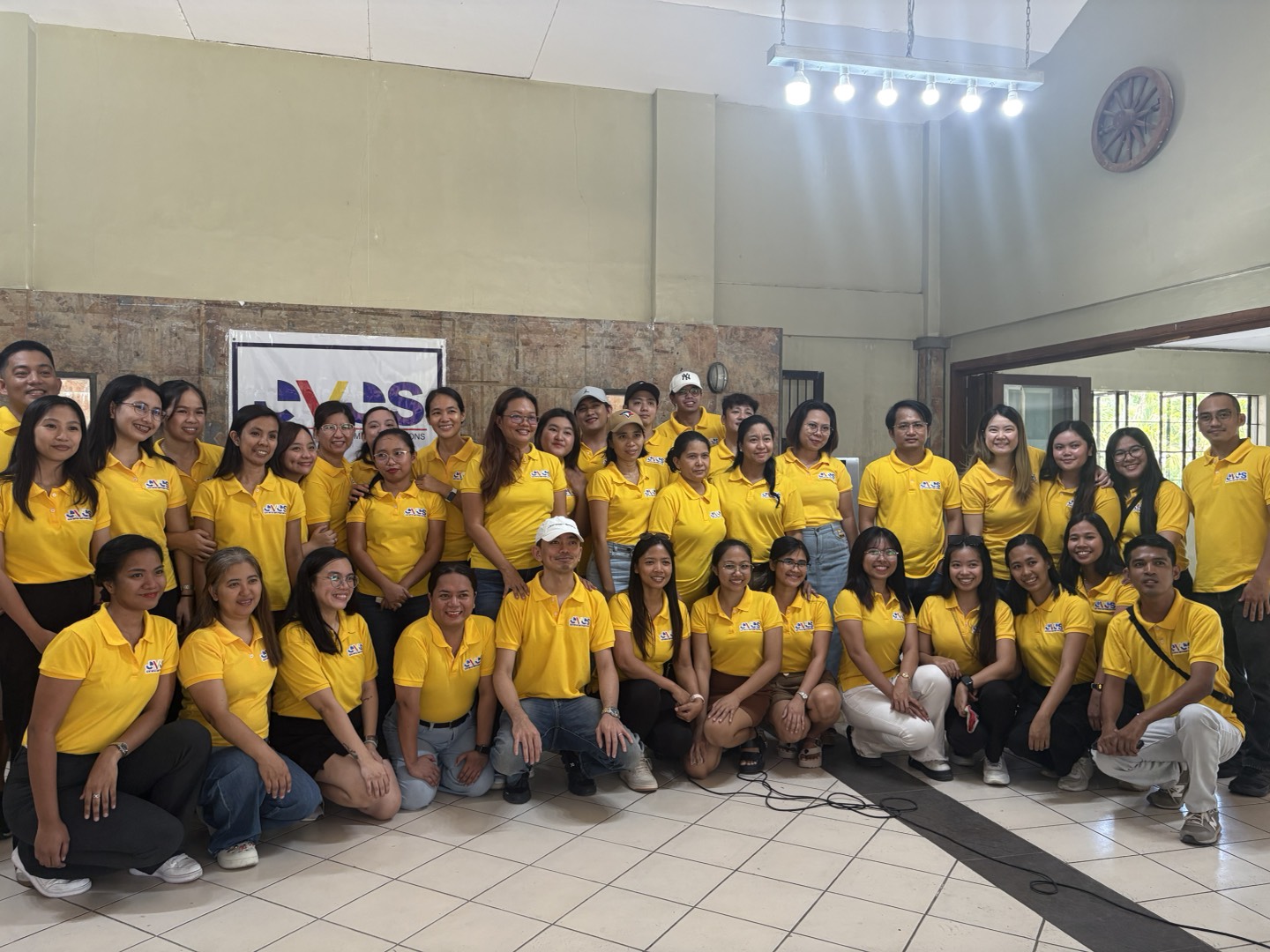
Stage 3: A Functioning Offshore Team. By the time a business has three to five offshore professionals working in coordinated roles, something qualitatively different has emerged. There is a team identity. Members develop working relationships with each other, not just with the client-side contact. Output quality improves because each person has visibility into adjacent functions and can catch issues before they reach the client. Onboarding new members becomes faster because the existing team has institutional knowledge they can transfer. The offshore function starts to feel less like a service arrangement and more like a department.
Designing the Team Architecture Before Hiring Begins
The sequence in which an offshore team is built has a disproportionate effect on how well it ultimately functions. The most common mistake is building from individual need rather than from a designed structure: hire whoever is most urgently needed right now, then hire whoever is most urgently needed next, and repeat until you have five people who work in loosely related functions but lack the connective tissue of a coherent team.
The alternative is to sketch the intended team structure before the first hire is made, even if that structure will take 12 to 18 months to fully staff. What functions need to exist in the team at full build? Which roles depend on each other? Which role should be hired first because its outputs create the inputs that other roles need? Which role is load-bearing for the team’s performance and therefore demands the most careful hiring?
Answering these questions at the design stage produces a team that grows coherently rather than one that reflects the sequence of urgencies the business encountered along the way.
What Offshore Teams in the Philippines Are Built For
The range of team structures that businesses have built in the Philippines spans from focused single-function teams to full multi-disciplinary operations. Understanding the most common configurations helps businesses identify the model that maps closest to their own needs.
| Team Type | Typical Functions Included | Business Context | Typical Team Size |
|---|---|---|---|
| Finance and Accounting Team | Bookkeeper, Staff Accountant, Payroll Accountant, AP/AR Specialist | SMEs with growing financial complexity | 2 to 5 |
| Administrative and Ops Team | VA/EA, Operations Coordinator, Data Entry, Back Office Support | Founders, executives, and scaling operations teams | 2 to 4 |
| Customer Success Team | Customer Service Reps, Team Lead, Quality Analyst | E-commerce, SaaS, and service businesses with volume | 3 to 10 |
| Technology Team | Frontend or Full-Stack Developer, QA Engineer, IT Support | Product companies, SaaS platforms, tech-enabled businesses | 2 to 6 |
| Blended Support Team | VA, Bookkeeper, Customer Service Rep | Small businesses needing coverage across multiple functions | 2 to 3 |
| Full Back Office | Accounting, HR Admin, Procurement, Data, Customer Service | Mid-market businesses offshoring an entire operational layer | 5 to 15 |
The blended support team configuration is particularly common among smaller businesses that need coverage across multiple functions but cannot yet justify a dedicated hire for each. The tradeoff is that generalist offshore professionals have shallower expertise per function than specialists, which makes the configuration more appropriate for lower-complexity, higher-volume work across each area.
The Communication Architecture That Holds a Team Together

An offshore team without a deliberate communication architecture is a collection of people doing parallel work who happen to share a Slack channel. The communication infrastructure that makes a team actually function as one has specific components that need to be designed, not assumed.
A team-level communication channel, separate from individual task channels. When all communication flows through a single group channel, it becomes noise. When each project or function has its own channel and there is also a team channel for broader updates and shared context, communication becomes navigable. This distinction sounds minor and has outsized practical impact.
Cross-role visibility into work in progress. Offshore teams develop coherence faster when members have visibility into what colleagues are working on, not just their own queue. A shared project board (Asana, ClickUp, Monday) where all team members can see active work creates the peripheral awareness that onshore teams develop through physical proximity and incidental hallway conversations.
A regular team-level touchpoint, not just individual check-ins. When the client’s only communication is one-on-one with each offshore team member, those team members have no direct relationship with each other as a working unit. A weekly or fortnightly team video call where all members are present, even briefly, builds the interpersonal connections that turn a group of parallel workers into a team.
A defined escalation and handoff protocol. When offshore Team Member A produces an output that Team Member B uses as an input, what happens when the output is late, incomplete, or incorrect? Having this defined before it first happens prevents the confusion that stalls workflows and forces the client into an unnecessary refereeing role.
Retaining Offshore Team Members Over the Long Term
The value of an offshore team compounds with tenure. A bookkeeper who has been with the business for three years knows which vendors are slow to invoice, which accounts carry seasonal patterns, and which reconciliation items come up every quarter. A customer service team lead who has been with the business for two years knows the product well enough to train new team members without client involvement. That institutional knowledge is not replaceable on a timeline that suits the business. It has to be accumulated through continuous employment.
Retention of offshore staff in the Philippines that are performing well requires active attention to a few consistent factors.
Compensation that keeps pace with the offshore professional’s growing value is the foundation. Offshore professionals who see their skills and institutional knowledge grow but their compensation remain static become susceptible to competing offers. Annual reviews with genuine consideration of performance-based adjustments are not a concession. They are a retention investment.
Recognition that goes beyond task completion. Offshore team members who feel their contribution is genuinely valued by the client organization they work for are significantly more likely to stay than those who feel interchangeable. That recognition does not require elaborate programs. It requires consistent acknowledgment of good work, inclusion in team communication, and the kind of professional respect that any capable person expects from a working relationship.
A clear sense of where the role goes. Offshore professionals who can see a professional development path within the arrangement, more responsibility, new skills, a title change, or simply growing scope and trust, are more engaged and more retentive than those in a role with no visible trajectory.
Choosing the Right Partner to Build With
The quality of the partner managing the employment and HR infrastructure around your offshore team has a direct effect on team stability. When employment is properly structured, compliance is managed, and payroll is handled reliably by a provider who knows what they are doing, the offshore team members have the professional stability that allows them to focus on the work rather than worrying about the administrative reliability of their employer.
An offshoring provider in the Philippines that treats team building as a strategic relationship rather than a transactional placement service approaches the engagement differently. They think about role sequencing, not just individual role-filling. They consider how a new hire will integrate with existing team members, not just whether the candidate matches the job description. They stay involved after placement and provide the ongoing HR infrastructure that keeps the team stable over time.
That kind of partner involvement is what distinguishes a business that has built a real offshore team from one that has accumulated a series of individual offshore hires that happen to be in the same Slack workspace.
A Team That Grows With Your Business
The businesses that build offshore teams in the Philippines and invest in them properly over two to three years consistently describe the result in similar terms: a part of the organization that they rely on as completely as any in-house department, at a cost structure that would not be possible with equivalent local staffing.
That outcome is not the result of a single good hire. It is the result of thoughtful team design, deliberate communication architecture, genuine investment in retention, and a provider relationship that supports the team’s stability through the inevitable changes that come with business growth.
EVES works with businesses that are ready to move beyond individual hires and build something more durable. The team at EVES brings experience in offshore team design, role sequencing, candidate matching, onboarding support, and the ongoing HR infrastructure that keeps offshore teams running at their best. Every placement is backed by a 100% satisfaction guarantee, so if a hire is not the right fit, EVES makes it right at no additional cost.
Contact EVES to start building your offshore team and have a conversation about what a properly structured team in the Philippines could do for your business.