
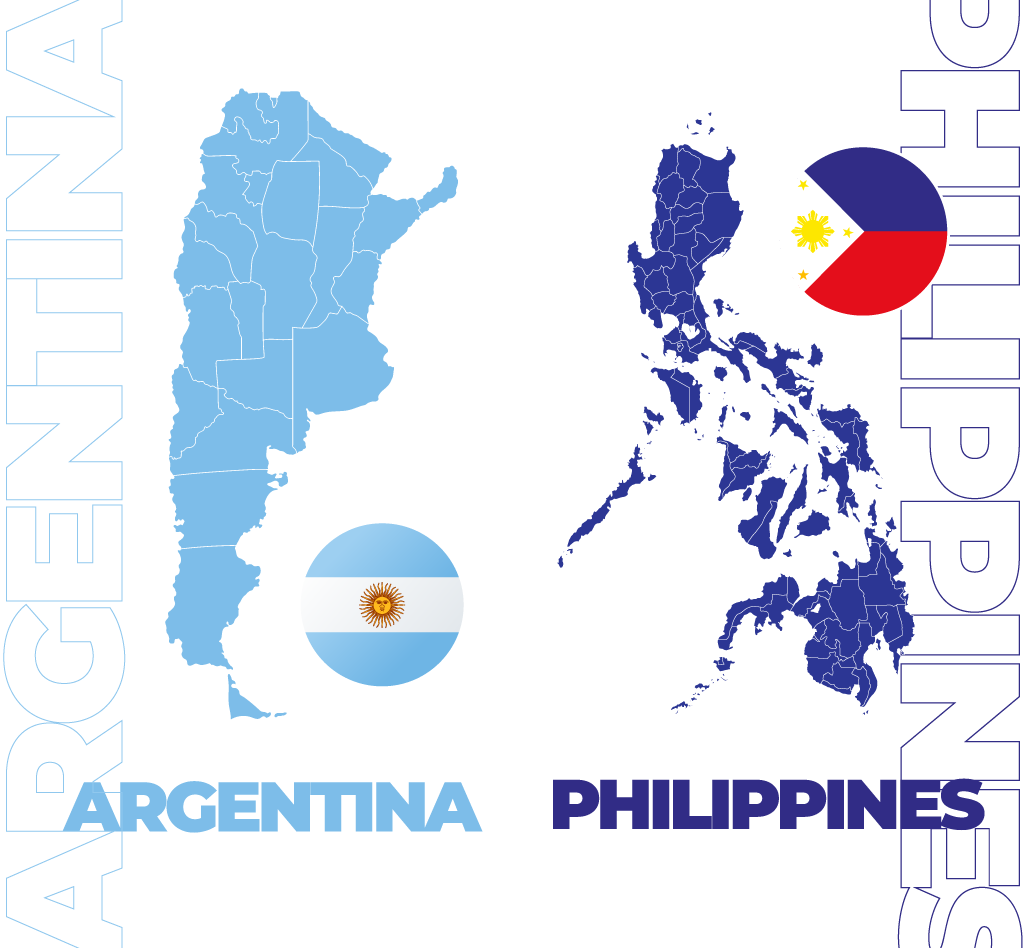
Offshore Accounting Destination Comparison: Philippines vs. Argentina
Accounting serves as the backbone of every organization. However, as financial regulations grow increasingly complex, qualified expertise becomes harder to find. This has led companies to seek proficient, cost-effective solutions, such as offshoring accounting functions, to maintain operational efficiency without compromising compliance.
Two countries that have captured the attention of businesses seeking offshore accounting solutions are the Philippines and Argentina. While both nations bring unique strengths to the table, each offers distinct advantages depending on the specific needs of a business.

Why Offshore Accounting Destination Choice Is Critical
Accounting is a compliance-driven, detail-sensitive function. Choosing the wrong offshore destination can lead to reporting errors, audit issues, communication breakdowns, and regulatory risk. Beyond cost savings, businesses must evaluate destination-specific factors such as accounting standards alignment, talent depth, economic stability, and long-term scalability when offshoring accounting operations.
The Offshore Outsourcing Landscape in the Philippines and Argentina
Both the Philippines and Argentina have gained recognition for their unique strengths in the global outsourcing market. Here’s a closer look at both countries as offshore outsourcing destinations:
-
The Philippines: A Leading Hub for Offshore Outsourcing
The Philippines has long been a leader in offshore outsourcing, especially for business process outsourcing (BPO) services. According to the Philippine Economic Zone Authority (PEZA), the country’s BPO industry continues to thrive, with over 1.3 million Filipinos employed in the sector.
As of 2023, the Philippines is currently ranked 12th in Kearney’s Global Services Location Index (GSLI) and continues to be “the BPO engine of Asia.” This recognition is largely due to the country’s highly skilled workforce, proficiency in English, and robust IT infrastructure.
-
Argentina: A Rising Outsourcing Destination
Argentina, located in the heart of Latin America, has also made strides in the outsourcing sector. The country is increasingly gaining recognition for its capabilities in information technology (IT) and business services. It is expected that the country’s IT outsourcing sector will have a market volume of $698.8 million by 2029.
One of Argentina’s key strengths is its proximity to the United States. Argentina is now an attractive nearshore destination for businesses looking to outsource to Latin America. However, it faces high inflation, currency volatility, and complex labor laws, which may become challenges deterring potential customers.

Nearshore vs Offshore Considerations for US Companies
Argentina’s geographic proximity allows for partial US-hour overlap and easier travel, which can benefit companies that value nearshore collaboration. The Philippines, while farther geographically, offsets this with widespread adoption of US working hours, established offshore delivery models, and extensive experience supporting US-based accounting teams.
Offshore Accounting: Philippines vs. Argentina
The Philippines and Argentina may stand out as strong contenders for offshore outsourcing, but how do they measure up when it comes to the specialized function of accounting?
Let’s explore how these two countries fare in the offshore accounting arena:
1. Skilled Talent Pool
The Philippines is home to one of the largest pools of accounting professionals globally. The country has over 200,000 CPAs, many of whom are employed in various sectors, including finance, tax, and audit services. This gives them an advantage in these specialized fields, where expertise is crucial for ensuring compliance and accuracy.
The country also produces around 3,000 new CPAs annually, providing a steady stream of highly skilled professionals ready to meet the growing demand for accounting services in global markets.
With many having experience with US-based clients and global firms (e.g., EY, KPMG, PwC, Deloitte), Filipino accountants are well-versed in US and international accounting standards (GAAP & IFRS). This proficiency makes them highly adaptable to the various accounting needs US companies require.
Argentina on the other hand, has a longstanding reputation for having a strong accounting profession, historically considered among the most prestigious in Latin America. Contributing factors to this prominence include having robust university education programs and a sophisticated financial sector.
Accounting Standards and Regulatory Alignment
Philippine accounting education and professional practice are tightly aligned with GAAP and IFRS, which are critical for US and multinational companies. This alignment reduces onboarding time, audit friction, and reporting errors. In Argentina, accounting standards adoption and enforcement vary, which can introduce additional review and reconciliation requirements for foreign clients.
2. Expertise and Quality Assurance
Filipino accountants actively enhance their expertise through certifications such as CMA, Xero, and COS. The country’s Quality Assurance Review (QAR) Inspection Program enforces consistent auditing and reporting standards.
By contrast, Argentina lacks a centralized quality assurance system outside regulated sectors, increasing reporting risk for offshore accounting engagements.
Audit Readiness and Reporting Reliability
For businesses subject to audits, consistent quality assurance is essential. Philippine offshore accounting teams are generally audit-ready and accustomed to working with external auditors, while Argentina’s fragmented oversight structure can require additional internal controls from client companies.
3. Cost Efficiency
The Philippines offers lower average hourly rates ($6/hour) compared to Argentina ($7/hour). While the difference appears marginal, Argentina’s inflation rate (229.82% in 2024) introduces pricing volatility that can impact long-term contracts and budgeting.
Cost Predictability and Long-Term Planning
Beyond hourly rates, predictable labor costs are critical for long-term offshoring success. The Philippines’ economic stability and mature BPO sector provide cost consistency, while Argentina’s inflation and currency instability can force frequent contract renegotiations.
4. Language Proficiency and Cultural Compatibility
The Philippines ranks higher in English proficiency and benefits from strong cultural alignment with Western business norms, particularly US accounting practices. Argentina’s Spanish-first environment may require additional communication effort and adaptation.
Time Zone Coverage and Month-End Close Efficiency
Many Philippine offshore accounting teams operate fully within US business hours, enabling same-day collaboration during month-end and year-end closing cycles. This operational overlap improves turnaround times and reduces delays compared to partial overlap models
5. Stability and Risks
The Philippines demonstrates political and economic stability, supported by government-backed incentives for the BPO sector. Argentina faces economic volatility, inflation, and labor regulation complexity that can elevate operational risk.
Data Security and Compliance Environment
The Philippines enforces the Data Privacy Act of 2012, aligning with international data protection principles. Offshore accounting teams in the Philippines commonly operate within ISO-compliant and SOC-aligned environments. Argentina’s regulatory enforcement varies by sector, requiring additional diligence from offshore clients.
Which Country Is Better for Different Business Needs?
Argentina may suit companies prioritizing nearshore collaboration or Spanish-language finance operations. The Philippines is better suited for US-focused accounting, audit support, management reporting, and long-term offshore finance teams requiring compliance alignment and operational stability.

Why the Philippines Stands Out
Argentina presents a growing and promising offshore accounting destination. However, the Philippines continues to outshine it in terms of talent availability, cost efficiency, language proficiency, and overall outsourcing infrastructure.
That said, Argentina’s overall outsourcing industry is still catching up to the Philippines in terms of scale and global recognition. The country’s large pool of skilled accountants, coupled with its favorable business environment and secure track record in offshore outsourcing, makes the Philippines the clear leader for businesses looking to offload their accounting functions overseas.
Offshore to the Philippines with EVES
Elevate your business operations by partnering with Elite Virtual Employment Solution (EVES), your trusted Philippines offshore company.
Working with EVES provides the following benefits:
✔ Efficient Recruitment: We manage the entire offshore recruitment process, from finding candidates to onboarding.
✔ On-Site Staff Deployment: EVES provides a comfortable, modern office with backup generators and 3Gb internet download speeds. Our on-site supervisors provide hands-on support to ensure smooth service delivery.
✔ Complete Staff Workstation: We supply all the software and equipment your team needs for a productive work environment.
Contact us today to get answers to your offshoring inquiries.