
Hiring Offshore Customer Support Agents: Skills to Look For
In today’s hyper-competitive business landscape, customer support has become more than just a reactive function. It’s a strategic pillar that impacts brand reputation, customer retention, and long-term growth. For many businesses, especially small and medium enterprises, building an in-house support team in high-wage markets can be costly, slow, and operationally complex. As a result, offshore customer support has emerged as an effective way to deliver world-class support without the price tag of local staffing.
But hiring offshore customer support agents isn’t as simple as posting a job ad and hoping for the best. Successful offshore hiring requires a clear understanding of the skills that matter most, the cultural and communication expectations of your customers, and how to evaluate and integrate offshore talent into your internal systems.
In this guide, we’ll walk through what to look for when hiring offshore customer support agents, the skills that matter most, common mistakes to avoid, and how to build a support team that enhances customer experience rather than undermines it.
Why Offshore Customer Support Matters
Before we explore specific skills, it helps to understand why offshore customer support is becoming a go-to strategy for businesses of all sizes. Offshore customer support offers companies the ability to scale support coverage, reduce operational costs, and access talent pools with strong language skills and professional service experience. When structured well, offshore teams work seamlessly with internal teams and deliver consistent, high-quality support that aligns with brand values.
For many businesses targeting English-speaking audiences, the Philippines has become a top destination due to its workforce’s communication skills, cultural alignment, and service-oriented mindset. Many organizations leverage customer service outsourcing Philippines to access agents who can handle both routine inquiries and complex customer interactions with professionalism and empathy.
What Makes an Effective Offshore Customer Support Agent?
Not every agent is equally equipped for the demands of modern support roles. The difference between a good and great offshore support agent goes beyond basic conversational ability. It starts with a combination of skills, temperament, and adaptability.
When hiring, assess candidates for the following core competencies:
Strong Communication Skills
At the heart of outstanding customer support is the ability to communicate clearly and compassionately. Offshore support agents must be able to:
- Understand customer intent even when messages are imperfect
- Write clear and concise responses, especially in chat or email
- Listen actively and ask clarifying questions
- Use positive language to reassure or guide customers
Communication excellence helps reduce repeat contacts, improves CSAT scores, and builds customer trust.
Problem-Solving and Critical Thinking
Many customer queries require more than rote responses; they require agents to interpret context, weigh options, and guide the customer toward resolution. A strong offshore support agent can:
- Break down ambiguous problems
- Offer logical solutions based on policy and customer needs
- Know when to escalate and communicate that escalation clearly
Agents who can troubleshoot independently improve operational efficiency and customer outcomes.
Technical Confidence
Even if your product or service isn’t highly technical, support agents need to operate comfortably within your tech ecosystem. They should be able to:
- Use your CRM or support platform competently
- Navigate knowledge bases and SOPs quickly
- Understand the basics of troubleshooting common issues
- Learn new tools and processes as they evolve
Technical fluency reduces training time and accelerates agent productivity.
Core Skills to Evaluate in Offshore Support Candidates

Evaluating offshore customer support talent requires a combination of structured assessment and real-world task simulation. Below are key areas to prioritize when interviewing or testing candidates.
1. Language and Comprehension
Beyond accent or fluency, this includes the ability to interpret customer intent, summarize issues clearly, and craft appropriate responses.
2. Empathy and Emotional Intelligence
Great support agents don’t just answer questions — they make customers feel heard and cared for.
3. Multi-Channel Handling
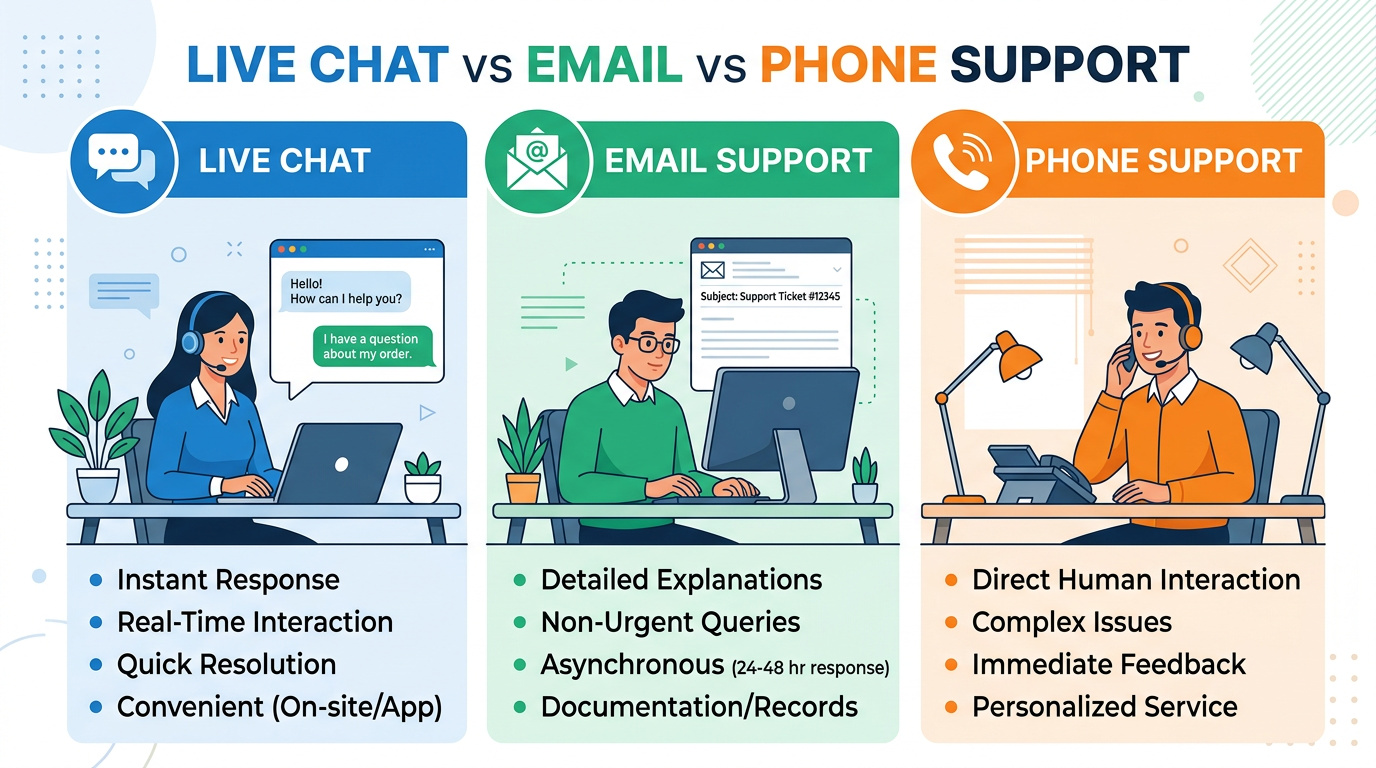
Support roles often span phone, email, chat, and social media. Look for candidates with experience in more than one channel.
4. Performance Under Pressure
Busy periods test patience and prioritization. Strong candidates maintain quality under stress.
5. Adaptability and Learning Speed
Offshore agents should pick up product knowledge and internal systems quickly and demonstrate willingness to improve continuously.
What to Avoid When Hiring Offshore Support Agents
Offshore hiring can deliver outstanding results, but certain pitfalls derail outcomes quickly.
Hiring Based on Price Alone
It’s tempting to select the lowest bidder, but this often correlates with poorer communication skills, higher turnover, or lack of professional discipline. Prioritize value over cost.
Ignoring Cultural Fit
Support agents represent your brand. Misalignment with your customer base’s expectations can lead to misunderstandings or lower satisfaction scores.
Skipping Scenario-Based Testing
Interview questions alone aren’t enough. Simulate real support scenarios to evaluate how candidates perform under realistic conditions.
Neglecting Onboarding and Ongoing Training
Without structured onboarding, even strong candidates may struggle to meet expectations. A thoughtful training program establishes consistent quality and reduces early turnover.
How to Structure the Hiring Process
To hire offshore customer support agents effectively, follow a structured process that includes clear evaluation criteria, performance expectations, and integration planning.
- Define the Role Precisely
Determine whether the role requires technical product support, general inquiries, escalation handling, or billing support, and tailor your evaluation accordingly. - Develop Assessment Tools
Use written tests, scenario simulations, and role-play interviews to assess communication, problem-solving, and product comprehension. - Conduct Behavioral Interviews
Ask candidates to describe past challenges, how they resolved difficult interactions, and how they prioritize tasks. - Evaluate Soft Skills
Soft skills are often the differentiator in support quality. Include empathy, active listening, and emotional regulation in your criteria. - Secure Training and Feedback Loops
Set up ongoing coaching, performance reviews, and knowledge-base updates to continue improving service quality over time.
How to Integrate Offshore Support Agents into Your Organization
Hiring is just the first step. Integrating offshore customer support agents into your operational ecosystem ensures they contribute meaningfully and consistently.
Start with onboarding that includes:
- Brand voice and tone guidelines
- Product or service training
- SOP walkthroughs and escalation paths
- Communication protocols with internal teams
Encourage participation in team meetings, performance reviews, and continuous learning. Treat offshore agents as part of the team, not contractors with limited involvement.
Performance Metrics That Matter
To ensure your offshore support team delivers value, monitor key performance indicators that reflect both efficiency and customer experience.
Look at:
- Customer Satisfaction (CSAT)
- First Response Time
- Average Handle Time
- First Contact Resolution
- Net Promoter Score (NPS)
- Turnover and Retention Rates
Metrics help identify training needs, capacity planning, and quality improvements.
Cost Considerations and Building Your Support Model
While cost savings are often a benefit of offshore hiring, the real goal is efficient, consistent support, and that requires investment.
Salary expectations, onboarding time, tooling, and management bandwidth all factor into the total cost of ownership. Balancing quality and cost requires clarity on outcomes, not just hourly rates.
Outsourcing vs. Building Your Own Offshore Team
Some businesses choose turnkey outsourcing arrangements, while others hire and manage their own offshore support staff. Each approach has trade-offs:
- Turnkey Outsourcing: Faster setup, bundled management, potentially higher per-agent cost
- In-House Offshore Teams: Greater control, direct culture alignment, requires internal management capability
For many organizations, a hybrid model that begins with outsourcing and transitions to direct hiring can offer the best of both worlds.
Hiring Offshore Customer Support Agents the Right Way

Hiring offshore customer support agents is a strategic move that can enhance service quality, extend coverage hours, and reduce operational cost, but only when executed thoughtfully. Focus on deep evaluation of communication, empathy, adaptability, and technical readiness. Build a structured onboarding and integration plan that treats offshore agents as full members of your support ecosystem. Monitor performance consistently and provide ongoing training to sustain quality.
When done well, offshore customer support becomes a growth lever that strengthens your brand reputation and keeps customers delighted.
At EVES, we help businesses build and scale high-performing offshore support teams that integrate seamlessly with your operations. Our hands-on, concierge-level approach ensures your offshore customer support strategy delivers consistent, measurable results.
If you’re ready to explore offshore customer support with confidence, contact us today to discuss a tailored EVES solution.