
Accounting Outsourcing Compliance Guide for CPA Firms
Outsourcing can help CPA firms scale faster, stabilize capacity during busy season, and expand Client Advisory Services (CAS) without constantly hiring locally. But when you outsource any accounting work, bookkeeping support, AR/AP processing, payroll assistance, reconciliation, tax prep support, or financial reporting tasks, you also expand your compliance scope.
That doesn’t mean outsourcing is risky by default. It means your firm needs a documented, repeatable way to evaluate an outsourcing partner, define controls, and maintain oversight. In other words: treat outsourced accounting like a regulated vendor relationship.
This guide outlines a practical compliance playbook for CPA firms. It’s written for US firms that need to protect sensitive client data, align with common security expectations, and demonstrate due diligence, without slowing down operations.
1) Start with What “compliance” Means for CPA Outsourcing
CPA firm compliance in outsourcing typically spans three layers:
- Legal and regulatory expectations (data protection requirements that apply to your firm)
- Client and contract requirements (privacy/security clauses, DPAs, audit rights)
- Operational controls (how work is performed day-to-day, who has access, and how activity is monitored)
Two widely referenced baselines for tax and accounting practices are:
- FTC Safeguards Rule (16 CFR Part 314), which requires covered financial institutions to maintain safeguards to protect customer information.
- IRS Publication 4557, which provides guidance and a checklist-style approach for safeguarding taxpayer data and building a security plan.
Key takeaway: Your outsourcing “compliance” goal is to prove you have reasonable safeguards and governance, before, during, and after a vendor relationship.
2) Map the Risk: What Can Go Wrong in Outsourced Accounting?
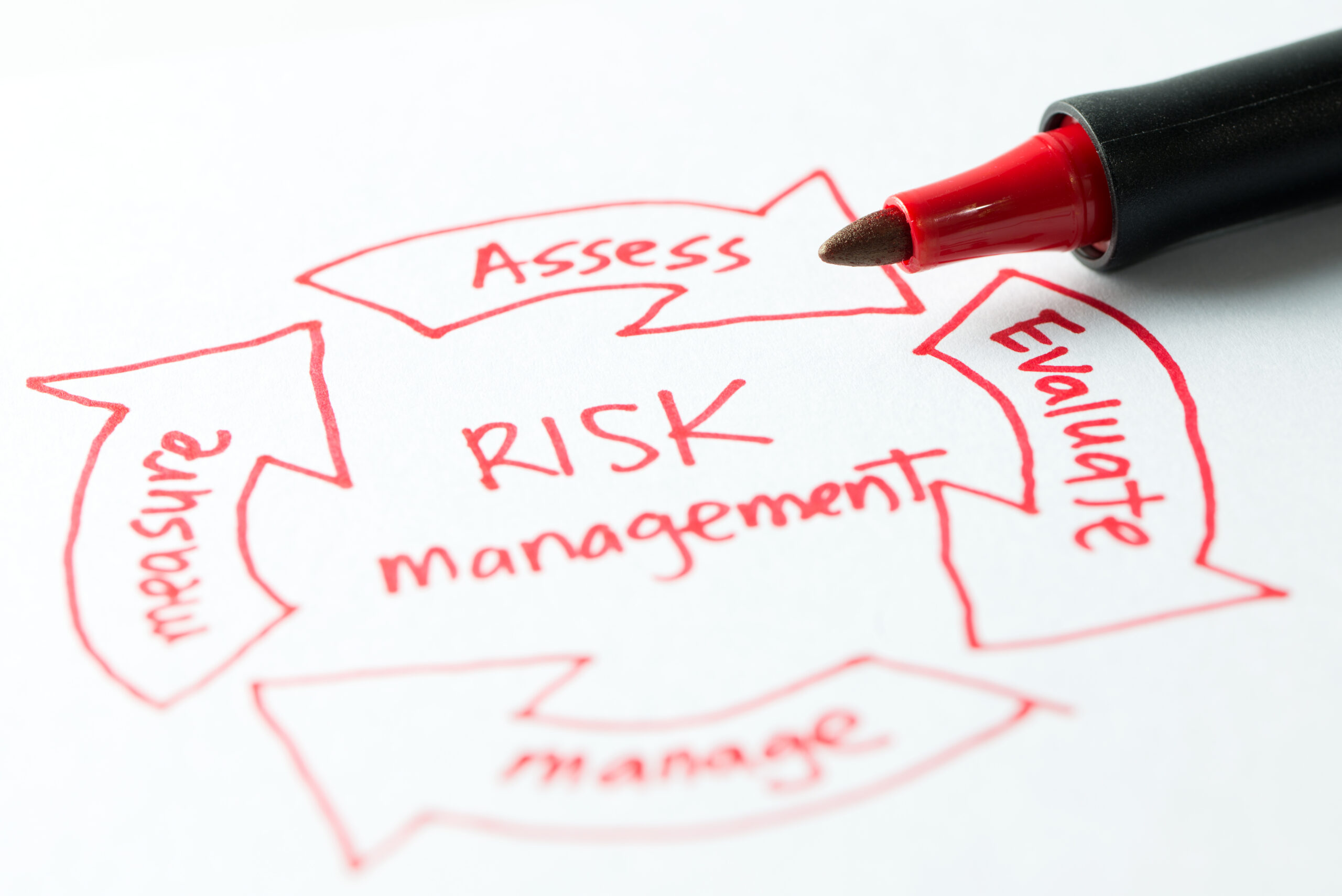
Most compliance failures in outsourced accounting aren’t about the accounting work itself, they’re about data handling and access. Common failure points include:
- Over-permissioned access (staff can see/export more data than their role requires)
- Weak authentication (no MFA, shared credentials, inconsistent offboarding)
- Uncontrolled endpoints (work done on unmanaged personal devices)
- Data leakage paths (downloads, USB use, personal email, screenshots, unapproved cloud storage)
- Lack of monitoring (no logs of exports, admin actions, or unusual access patterns)
- Unclear incident response (no playbook, slow client notification, uncertain responsibilities)
A compliant outsourcing setup reduces these risks through clear controls that are easy to validate and audit.
3) Use a “control-first” Approach to Choosing an Outsourcing Model
Before you evaluate any partner, define your minimum control standards. For most CPA firms, the essentials include:
Identity and access management
- Unique user accounts (no shared logins)
- Role-based access (least privilege)
- Quarterly access reviews
- Immediate deprovisioning upon role change or termination
Strong authentication
- MFA enforced across email, accounting platforms, file storage, password managers, and remote access
- SSO preferred where available (for centralized control)
Endpoint and workspace security
- Managed devices or a secure virtual desktop/controlled environment
- Full-disk encryption and endpoint protection (EDR/AV)
- Patch management standards and removal of local admin rights
Data handling and DLP rules
- No local downloads by default (exceptions documented)
- DLP controls for file storage and email
- Restrictions on removable media (USB), printing, and copy/paste as needed
Logging and oversight
- Logs for access, exports, and admin actions
- Alerts for suspicious activity
- Retention periods aligned with your firm’s policies and client agreements
This is the “proof layer” regulators and clients care about.
4) Cross-border Considerations and Privacy Alignment
If your outsourced team sits outside the US, you should document cross-border processing and privacy responsibilities clearly.
For teams based in the Philippines, it helps to understand that the Philippines has its own privacy law framework under the Data Privacy Act of 2012 (Republic Act 10173).
From a practical outsourcing standpoint, that means your policies should define:
- What data is processed, for what purpose, and by whom
- Where systems are hosted and accessed
- Whether any subprocessors are involved
- How you handle retention and secure disposal
Your internal vendor inventory and security documentation should explicitly include offshore accounting in the Philippines within scope, with clearly documented systems used, mapped data flows, defined access controls, and assigned oversight responsibilities. This ensures compliance is documented, auditable, and measurable rather than assumed.
5) Compliance Checklist for CPA Firms
| Area | What your firm should require | What to request as evidence |
|---|---|---|
| FTC/IRS-aligned security program | Written security program, assigned owner, risk assessment cadence | Security policy summary, risk assessment template, ownership chart |
| Access control | Least privilege, unique accounts, offboarding SLA | Role matrix, sample access review report, offboarding workflow |
| MFA enforcement | MFA required for all critical systems | MFA policy + screenshots/config evidence |
| Device security | Managed endpoints or controlled VDI; encryption + EDR | Device policy, EDR vendor confirmation, patching cadence |
| Data loss prevention | Restrict downloads/USB/printing; approved storage only | DLP rules summary, exception process, storage policy |
| Monitoring & logs | Track exports, admin activity, failed logins; alerting | Log sources list, retention policy, sample alerts |
| Incident response | Documented IR plan + notification timeline | IR playbook, escalation contacts, tabletop exercise notes |
| Privacy governance | DPA/DPIA approach, retention/disposal, subprocessor controls | Contract templates, retention schedule, data-flow diagram |
6) Contracts CPA Firms Should Standardize (To Reduce Friction)

Your contract structure is often where compliance either becomes easy or painful.
At a minimum, your outsourcing agreement (and any addenda) should address:
- Confidentiality + permitted use (no secondary use, no training on client data without explicit permission)
- Security controls and audit rights (what you can review, how often, and what documentation is available)
- Breach/incident notification (timelines, investigation cooperation, and client communication responsibilities)
- Subprocessors (approval requirements and disclosure obligations)
- Data retention and secure disposal (what happens at contract termination)
- Access and offboarding SLAs (who disables access and how fast)
If you support tax workflows, align this contract structure with your firm’s security plan and the IRS’s recommended safeguards for taxpayer data.
7) Oversight: How to Run Outsourced Accounting Compliantly Day-to-day
Compliance isn’t a one-time checklist; it’s a routine.
A lightweight, effective oversight cadence looks like this:
- Weekly: workflow QA (sample checks), exception review, ticket queue review
- Monthly: access exceptions audit (any downloads, permission changes), performance + error trends
- Quarterly: formal access review + vendor control attestation refresh
- Annually: security plan review, tabletop incident-response exercise, contract refresh
This kind of cadence helps you demonstrate “reasonable safeguards” and continuous governance, especially important under expectations like the FTC Safeguards Rule’s focus on protecting customer information.
Bottom Line
Outsourcing accounting can be a major growth lever for CPA firms, but the compliance bar rises the moment client financial data leaves your in-house team. A strong outsourcing compliance program comes down to three things:
- Documented controls (access, MFA, devices, DLP, monitoring)
- Contract clarity (security terms, audit rights, incident response)
- Ongoing oversight (reviews that produce evidence, not just opinions)
When those are in place, outsourcing becomes scalable, defensible, and easier to sell to risk-conscious clients. Firms that approach outsourcing with structure and documented controls are better positioned for long-term growth. If you’re evaluating how to expand capacity without compromising compliance, read our guide on how to build a scalable offshore accounting team. It outlines the operational framework, staffing model, and governance structure CPA firms use to scale securely and sustainably.
Build a Compliant, Scalable Outsourcing Model for Your CPA Firm
Outsourcing accounting work does not reduce your firm’s regulatory responsibility, but with the right structure, it does not increase your risk either. The difference lies in documented controls, disciplined access management, and clear oversight.
At EVES, we work with CPA firms that want to scale responsibly. Our offshore staffing model is built around secure workflows, defined permissions, structured onboarding, and transparent performance management, so your firm maintains visibility and control at every stage.
When you partner with EVES, you can expect:
- Clearly defined role-based access controls
- Structured onboarding and immediate offboarding procedures
- Secure working environments aligned with US accounting firm expectations
- Ongoing reporting and management oversight
- Dedicated communication channels for accountability
If you’re evaluating how to expand capacity while maintaining strong compliance standards, we invite you to start with a structured discussion.
Contact EVES today to schedule a consultation and explore how your firm can scale securely and confidently.