
2026 Tech Tools for Philippine Virtual Assistants
The gap between a competent VA and an exceptional one is not always about skill or attitude. More often than business owners or hiring managers realize, it is about tools. The VA who knows which tool to use for which task, who can move fluently across platforms without friction, and who stays current with what is emerging in their space, delivers a materially different quality of output from one whose toolkit stopped evolving two years ago.
For Filipino virtual assistants, tool fluency has become a core professional credential. US and Australian clients are running increasingly sophisticated operational stacks, and the VA who cannot navigate them confidently creates friction rather than removing it. Understanding which tools are now standard, which are becoming standard, and which represent genuine capability differentiation in 2026 matters both for VAs who want to be competitive and for businesses deciding whether a candidate is ready for what their role actually requires.
This article covers both audiences: the tools landscape as it exists in 2026, what each category does, and how tool fluency affects the quality of the VA working relationship from day one.
Why Tool Fluency Matters More Than It Used to

Three years ago, a VA who could manage email, maintain a calendar, and use Google Docs was meeting the baseline expectation for most roles. That baseline has shifted significantly.
The businesses hiring VAs in 2026 are running cloud-based project management systems, AI-assisted writing and research tools, CRM platforms with automated workflow logic, and communication stacks that require real-time navigation across multiple channels simultaneously. A VA who has never used Asana, who has not worked with any AI productivity tool, and who has no familiarity with CRM systems is not starting from the same baseline as one who works in these environments daily.
This shift creates both a challenge and an opportunity. The challenge is that the tool learning curve adds to the calibration period when a VA joins a new client’s environment. The opportunity is that VAs who invest in their tool fluency before they need it are significantly more attractive to quality clients and reach productive operation faster once placed.
The Core Tool Categories Every Philippine VA Should Know in 2026
1. Communication and Collaboration
These are the tools the entire working relationship runs on. A VA who cannot navigate them smoothly creates daily friction in the working relationship regardless of how skilled they are at their actual tasks.
Email clients. Gmail (Google Workspace) and Microsoft Outlook remain dominant. Beyond basic email management, the expectation in 2026 is that VAs understand inbox organization systems (labels, filters, folders), delegation features (sending on behalf of), and email scheduling. The difference between a VA who manages an inbox and one who manages it intelligently is largely in whether they understand how these features work together.
Messaging platforms. Slack and Microsoft Teams are now standard in most business environments. VAs who work comfortably in these platforms, understanding channels versus direct messages, threading conventions, status settings, and notification management, integrate into a client’s team communication more naturally than those treating these platforms as chat tools with a different interface.
Video conferencing. Zoom, Google Meet, and Microsoft Teams video are all in active use. VAs who can manage calendar invites, send links, set up recurring meetings, manage waiting rooms, and support meeting recordings are handling a function that occupies a meaningful portion of many executive assistant roles.
2. Project and Task Management
The shift to structured project management tools has been one of the most significant changes in how remote teams operate, and VAs who cannot work within these systems are locked out of a significant portion of the value they could otherwise deliver.
Asana remains one of the most widely used platforms for task and project management. VAs who understand how to create tasks, assign owners, set due dates, manage dependencies, and use templates for recurring workflows are significantly more useful to businesses that run on Asana than those learning the platform during week one.
ClickUp has grown substantially in adoption among SMEs and agencies, partly because its flexibility allows businesses to configure it to match their specific workflow structure. VAs with ClickUp experience in multiple configuration styles are genuinely versatile.
Monday.com, Notion, and Trello each have significant user bases. Notion in particular has evolved from a notes tool into a comprehensive workspace platform and is now used for knowledge management, project tracking, SOP documentation, and internal wikis by a growing number of businesses.
3. AI Productivity Tools
This is the category that has changed most significantly in the past two years and where tool fluency creates the largest capability gap between VAs who are investing in their skills and those who are not.
ChatGPT, Claude, and Gemini are now standard productivity tools rather than experimental novelties. VAs who use AI assistance fluently, writing better prompts, verifying outputs, editing for tone and accuracy, and integrating AI into research and drafting workflows, produce a measurably higher volume of quality output per hour than those who do not.
Perplexity has emerged as a particularly useful research tool, combining search with AI synthesis in a way that makes fact-gathering and topic summarization faster than traditional search-based research.
Grammarly and Hemingway Editor remain relevant for VAs whose roles involve significant written communication. The ability to self-edit and produce polished written output without requiring heavy client review time is a distinct professional advantage.
4. Calendar and Scheduling Tools
Calendar management is one of the highest-value VA functions, and tool fluency in this category directly affects how much time the VA saves versus creates for the person they support.
Google Calendar and Outlook Calendar are the foundational tools. Advanced proficiency means understanding time zone management (particularly important for VAs supporting US clients from the Philippines), shared calendar permissions, recurring event structures, and meeting conflict resolution.
Calendly, Acuity Scheduling, and SavvyCal are the most common scheduling tools used by businesses that allow clients or partners to book directly. VAs managing these platforms need to understand availability window configuration, buffer time settings, booking confirmation workflows, and calendar integration so that booked meetings appear correctly in the primary calendar without requiring manual entry.
5. CRM and Sales Support Tools
VAs supporting sales teams, business development functions, or client relationship management roles need CRM familiarity that goes beyond data entry.
HubSpot CRM is the most widely used platform in this space among SMEs and is increasingly a standard VA skill requirement. Understanding contact and company records, deal pipeline management, activity logging, and basic workflow automation is the expected competency level for VAs in sales support roles.
Salesforce is more common in larger enterprise environments. Basic navigation, record updating, report running, and activity logging are the core VA-level competencies.
Zoho CRM and Pipedrive appear frequently in SME and startup environments. VAs who have worked across multiple CRM platforms rather than only one are more adaptable when placed with a new client whose system they have not used before.
6. Document and File Management
Professional document management is a foundational VA competency that more business owners notice when it is absent than when it is present.
Google Drive and Microsoft SharePoint/OneDrive are the primary cloud storage platforms. VAs who maintain organized, permission-appropriate, consistently named file structures are providing a backend organization service that has compounding value over time.
Dropbox remains in active use in creative and media-heavy industries and among businesses that prefer it to Google’s ecosystem.
DocuSign and Adobe Sign are standard for businesses that use electronic signatures. VAs who can prepare, send, track, and file signed documents handle a function that occurs frequently in legal, real estate, and professional services environments.
The 2026 Philippine VA Tool Proficiency Map
| Tool Category | Entry-Level Expectation | Mid-Level Expectation | Advanced Expectation |
|---|---|---|---|
| Email (Gmail / Outlook) | Send, receive, basic organization | Labels, filters, delegation, scheduling | Full inbox management system, templates, auto-responses |
| Communication (Slack / Teams) | Basic messaging, file sharing | Channel management, integrations, threading conventions | Workflow automation, bot configuration, cross-platform coordination |
| Project Management (Asana / ClickUp) | Task creation and completion | Project setup, dependencies, recurring tasks, reporting | Template creation, workflow automation, team oversight |
| AI Tools (ChatGPT / Claude) | Basic prompting, output review | Structured prompting, research assistance, drafting workflows | Multi-tool AI workflow integration, output quality management |
| Calendar (Google / Outlook) | Scheduling, basic invites | Time zone management, shared calendars, conflict resolution | Full executive calendar management, external scheduling tools |
| CRM (HubSpot / Salesforce) | Contact and activity entry | Pipeline management, report running, workflow triggers | Automation setup, integration management, reporting dashboards |
| Document Management (Drive / SharePoint) | File storage and sharing | Folder structure design, permission management | Full organizational system design, version control |
| Design Tools (Canva) | Basic template editing | Custom design within brand guidelines, asset management | Brand kit management, template creation for team use |
What This Means for Businesses Hiring a VA
For a business evaluating VA candidates, tool proficiency is a screening criterion that deserves explicit attention during the evaluation process rather than being assumed from years of experience. Ask candidates specifically which tools they use daily, at what level of proficiency, and what they have done with those tools in a real working context.
A VA who claims Asana experience but has only used it as a task recipient rather than a project builder will have a different ramp-up requirement than one who has set up and maintained Asana projects for multiple clients. Asking for a specific example (“describe a project you managed in Asana, what the structure looked like, and how you handled recurring tasks”) surfaces the actual depth of experience rather than the claimed familiarity.
EVES evaluates tool proficiency as a specific component of candidate assessment, matching candidates to the platforms the client business actually uses rather than presenting technically skilled candidates who will require significant platform onboarding at the client’s expense.
What This Means for Filipino VAs Building Their Career
For Filipino professionals building or advancing a VA career, the tool landscape in 2026 makes one thing clear: passive familiarity with tools is no longer sufficient. Employers expect active, daily proficiency in the platforms their business runs on, and the VAs who can demonstrate that from a portfolio of real working experience rather than a checklist of tools on a CV are the ones who receive better offers, reach productive operation faster, and build the kind of professional reputation that generates referrals.
The most effective way to build tool proficiency is through use rather than through training courses alone. Finding opportunities to work within these platforms in any current role, volunteering to take on tasks that involve unfamiliar tools, and building practice projects in free-tier versions of platforms that require a learning curve are all faster paths to genuine proficiency than watching tutorial videos without hands-on application.
The combination of strong English communication, professional working habits, and genuine tool fluency across the categories above is what makes a Filipino VA genuinely competitive in 2026 for the quality of roles that offer the strongest career development. Virtual assistant outsourcing in the Philippines has matured to the point where the bar is not just whether a VA can do the tasks but whether they can do them in the systems the client is already running, on day one, without requiring the client to become a platform trainer.
Tools Are the Foundation. The Right Placement Builds on It.
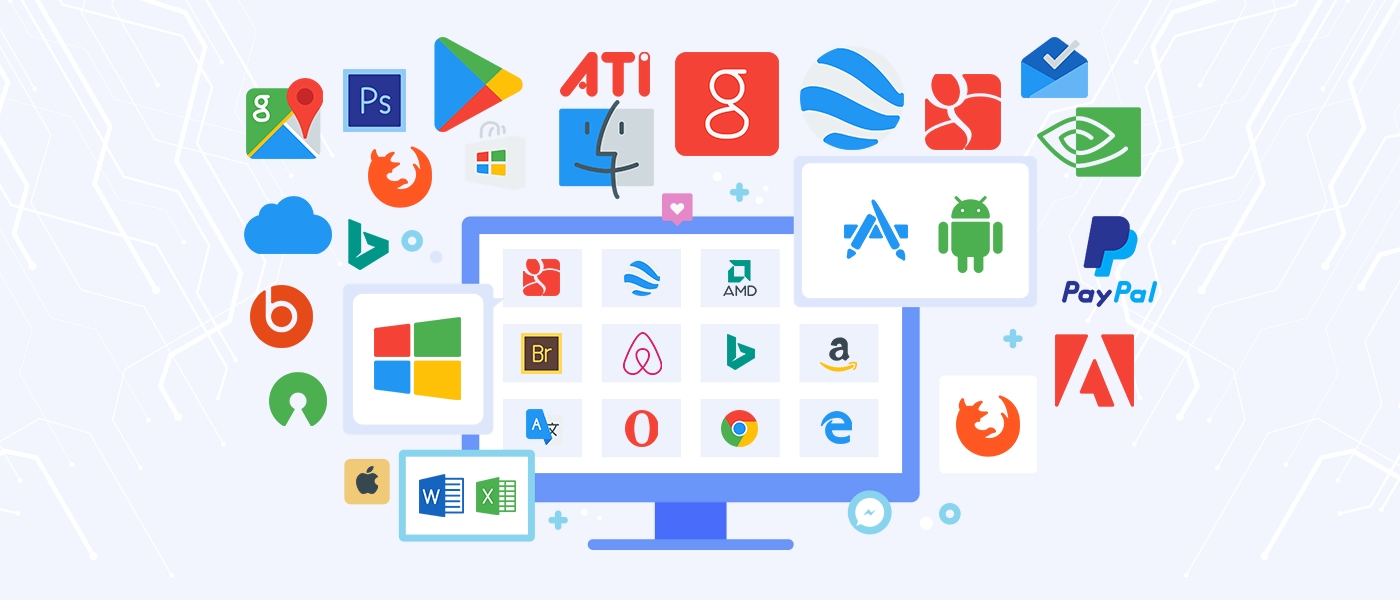
Tool fluency creates the operational foundation for a productive VA relationship. The working culture, communication habits, and professional orientation that Filipino VAs bring to their roles build on that foundation to produce the kind of working relationship that business owners describe as indispensable rather than merely useful.
EVES sources and places Filipino virtual assistants matched to the specific tool environments, role requirements, and communication expectations of each client. Every placement is backed by a 100% satisfaction guarantee, so if the fit is not right, EVES makes it right. Whether you are a business looking for a VA who is already proficient in your stack, or a Filipino professional looking for a placement that matches your current skill level and career goals, the conversation starts in the same place.
Contact EVES here to find the right VA for what your business needs to run in 2026 and beyond.